





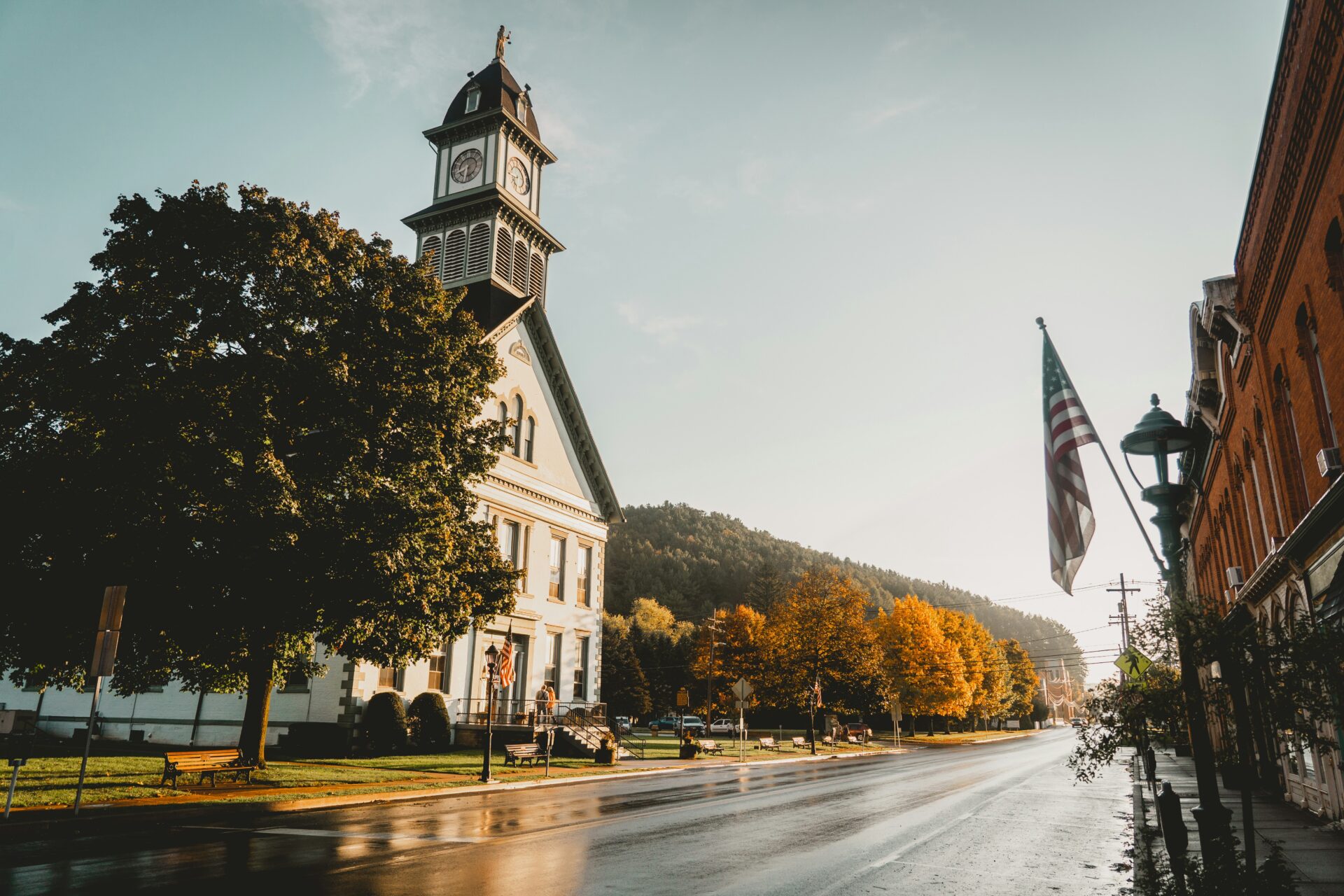

The show that became autumn
Gilmore Girls has become increasingly synonymous with autumn. Whether it is the warm glow of the lamplight in Lorelai’s house or the comfort that Carole King’s ‘Where You Lead’ brings, viewership seems to rise as quickly as the leaves fall. But beyond the show’s autumnal aesthetic, why is it that season after season, Gilmore Girls continues to feel so at home in autumn’s fading light?
Part of the answer lies in the world the show creates. Stars Hollow is a place of cozy interiors, coffee-fueled conversations, changing leaves, small-town traditions and an endless calendar of seasonal events. Autumn is woven into the fabric of the show, making it feel less like a backdrop and more like part of its identity.
It is perhaps unsurprising, then, that articles on Gilmore Girls start appearing around September of most years. From the lists of the coziest episodes to watch, to guides on setting the mood for the perfect Gilmore Girls rewatch at home, to detailed schedules designed to help viewers experience different seasons alongside the main characters, Gilmore Girls has become part of the cultural press cycle.
The ritual is reflected in viewing behavior as well. Since 2021, there have been significant increases in viewers tuning into the show, watching Lauren Graham begin the long walk to Luke’s diner in the pilot episode. The show’s biggest week falls between late September and October every year, right in time for Rory’s birthday.
The timing is notable. As the weather changes and cultural attention turns towards comfort, nostalgia and familiar routines, Gilmore Girls seems to naturally find its way back into people’s viewing habits.
A ritual, not just a rewatch
The seasonal relationship with Gilmore Girls sits within a wider cultural cycle. Every autumn, the show re-enters the conversation – on social media, in lifestyle coverage, through viewing recommendations and increasingly through brand activity.
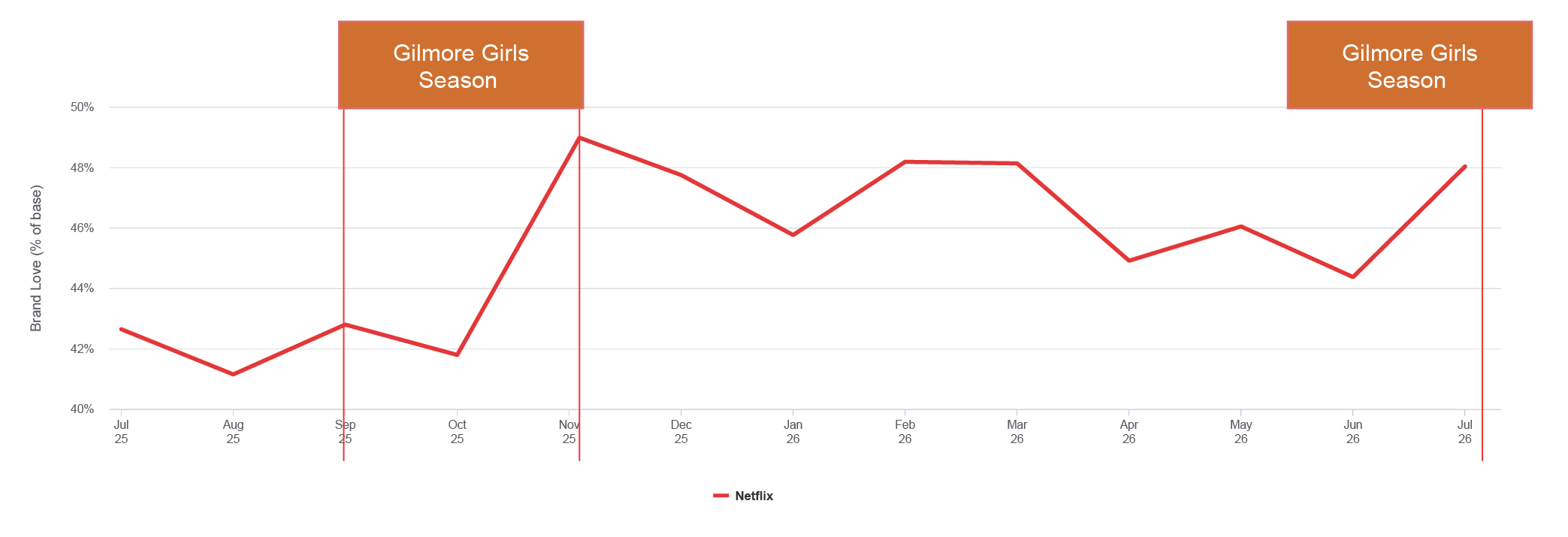
Last year, Brand Love for Netflix in the UK among women peaked in the autumn months, reaching 49% in November of 2025. This upward trend continues this year, ahead of September. Unfortunately, due to the vast amount of factors that affect Netflix, it would be difficult to claim that this increase in Brand Love is specifically driven by Gilmore Girls’ autumn resurgence. Supplementary research, however, highlights the show’s own seasonal success.
When Stars Hollow becomes shoppable
As the Gilmore Girls roam Stars Hollow, brands and institutions alike appear to be keen on joining the ride by attaching themselves to what has become a beloved cultural icon.
In September 2025, Asda tapped directly into that nostalgia with a range built for peak autumn comfort, turning a much-loved cultural property into a highly shoppable seasonal range. Featuring recognizable references to Luke’s Diner and Stars Hollow, the collection was designed to appeal to both fans of the show as well as wider autumn shoppers. Over the same period, Asda saw an increase in Brand Love among women aged 16–45, rising from 30% in September to a peak of 39% in December.
The relationship continues this year. Fans of the show have taken to social media to celebrate Asda’s newly released Gilmore Girls collection, arriving just in time for the start of the cozy season. Simultaneously, we see Brand Love gradually increase following the release, from 32% at the start of the month to 34% by the end of the month.
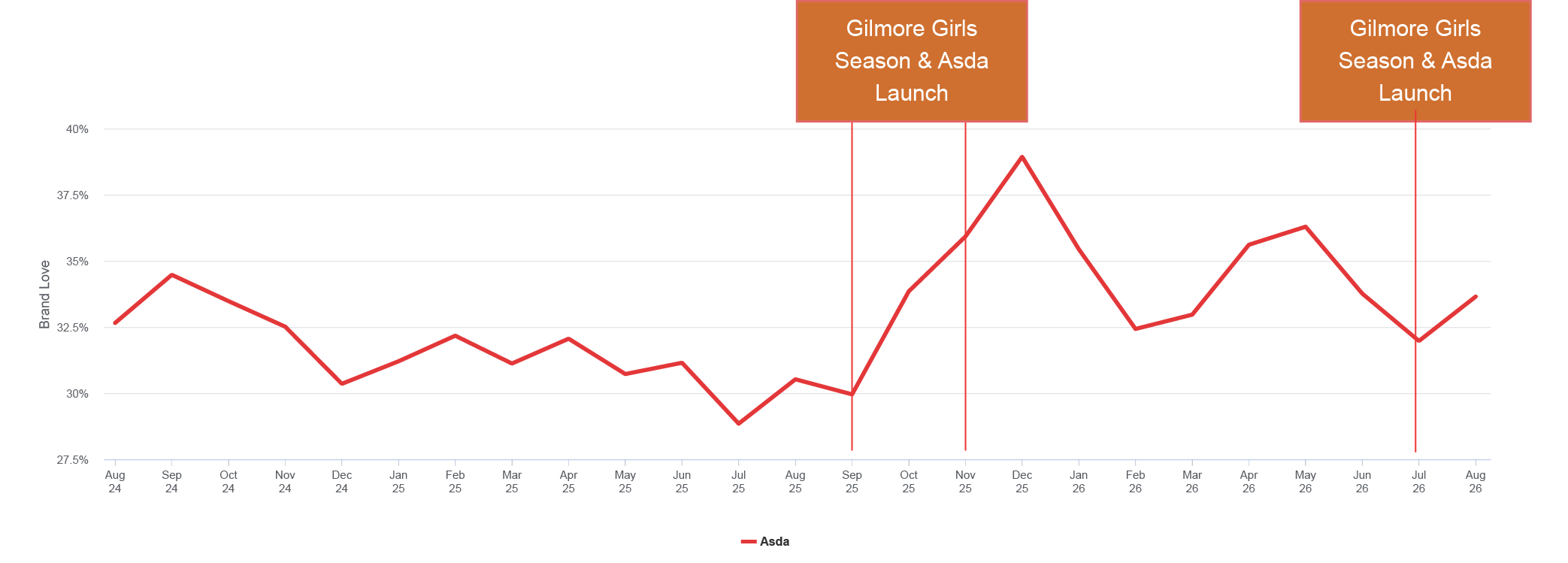
Asda’s alignment with Gilmore Girls demonstrates how brands can tap into an established cultural phenomenon to become part of a seasonal conversation. The show already brings with it a recognizable world of comfort, nostalgia and autumnal familiarity. By aligning with that world, Asda is able to become part of the seasonal culture, generating further interest and increasing Brand Love.
The opportunity for brands
More than two decades after its 2000 debut, Gilmore Girls continues to deliver the kind of cultural relevance most franchises would envy. Its staying power has turned it into a perennial autumn ritual, one that continues to attract audiences long after its original run and keeps brands eager to be part of the conversation. Asda is just one example; Primark and Matalan have also leaned into the appeal this year, releasing their own Gilmore Girls-inspired collections.
This enduring pull is exactly what makes Gilmore Girls such a valuable autumn platform for brands. Its appeal is not simply that people like the show; it is that the show has become intertwined with a particular moment in the year and with a particular set of feelings: comfort, nostalgia, familiarity and escapism.
And that’s exactly where the opportunity lies for brands. When autumn comes, audiences don’t just return to Gilmore Girls. They return to Stars Hollow – and increasingly, brands are finding ways to come along for the ride.